Transparency in
Economic Governance
Access real-time data on Ghana's public debt, IMF program status, and economic indicators. Empowering citizens with data-driven insights.
GDP Growth
5.5%
Projected 2026 Growth
Last updated: 31 Mar 2026
Debt to GDP
45.0%
Total: GH₵ 719.5B
Last updated: 30 Jun 2026
Inflation Rate
4.6%
Declining Trend
As of: 28 Aug 2026
Exchange Rate
10.99
GHS per USD
Last rate: 13 Feb 2026
IMF Disbursed
84%
~$2.7B of ~$3.2B
Updated: 15 Dec 2025
Forex Reserves
$6.7B
2.7 months of imports
Source Date: 13 Feb 2026
External Debt
45.6%
Share of Total Debt
Last updated: 30 Jun 2026
Debt Service
0.0%
of Revenue
As of: N/A
Total Debt
GH₵ 719.5B
Public Debt Stock
Last updated: 30 Jun 2026
Domestic Debt
GH₵ 391.1B
54.4% of Total
As of: 30 Jun 2026
External Debt
GH₵ 328.4B
45.6% of Total
As of: 30 Jun 2026
Policy Rate (MPR)
14.0%
Monetary Easing
Last update: 28 Aug 2026
Empowering Economic
Governance through Data
We provide comprehensive tools to monitor fiscal performance, track debt sustainability, and hold governance accountable.
Public Debt Tracker
Deep dive into Ghana’s debt portfolio, sustainability analysis, and creditor breakdown with interactive visualizations.
Analyze Debt DataIMF Bailout Monitor
Track the performance of the $3B Extended Credit Facility. Monitor disbursement schedules and structural benchmarks.
Track IMF ProgressEconomy Dashboard
Comprehensive overview of Ghana’s key economic indicators including GDP, inflation, and exchange rates.
View DashboardResource Centre
Access a comprehensive digital library of policy papers, fiscal reports, and economic datasets for public scrutiny.
Browse LibraryPrograms
Participate in high-level policy dialogues and town hall meetings designed to foster inclusive economic governance.
View ProgramsMeet Your Economic Analyst
Ask complex questions about Ghana's economy and get instant, data-backed answers powered by our advanced intelligence engine.
Latest Insights
Expert analysis, policy briefs, and research papers on Ghana's changing economic landscape.
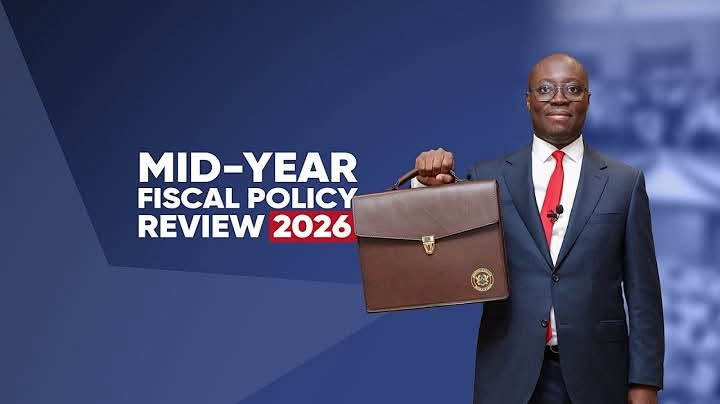
𝐒𝐭𝐚𝐛𝐢𝐥𝐢𝐭𝐲 𝐈𝐬 𝐍𝐨𝐭 𝐄𝐧𝐨𝐮𝐠𝐡
Finance Minister Dr. Cassiel Ato Forson presented the 2026 Mid-Year Fiscal Policy Review to Parliament, and the evidence he tabled supports that claim. This is not a contested political assertion. It is recognised by Ghana's external partners. The IMF programme has run to successful completion and the country is transitioning to a Policy Coordination Instrument, a step no government reaches without meeting its targets. At EGP, we say so plainly and we commend it.
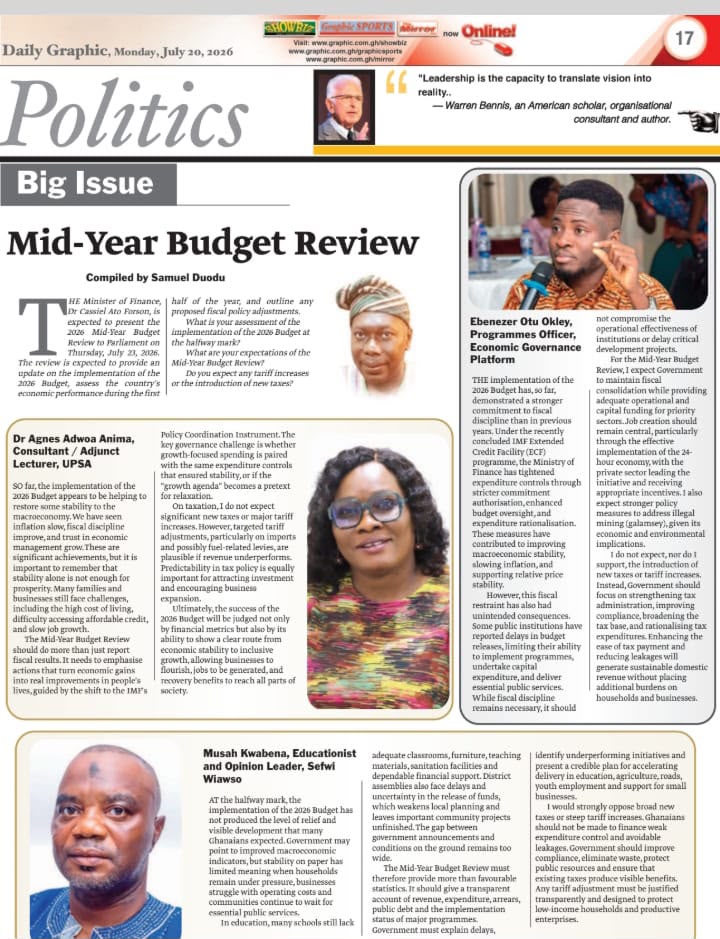
The implementation of the 2026 Budget has, so far, demonstrated a stronger commitment to fiscal discipline than in previous years.
The implementation of the 2026 Budget has, so far, demonstrated a stronger commitment to fiscal discipline than in previous years. Under the recently concluded IMF Extended Credit Facility (ECF) programme, the Ministry of Finance has tightened expenditure controls through stricter commitment authorisation, enhanced budget oversight, and expenditure rationalisation.
𝐖𝐨𝐫𝐥𝐝 𝐁𝐚𝐧𝐤 𝐅𝐥𝐚𝐠𝐬 𝐒𝐞𝐭𝐛𝐚𝐜𝐤𝐬 𝐢𝐧 𝐆𝐡𝐚𝐧𝐚’𝐬 𝐄𝐧𝐞𝐫𝐠𝐲 𝐒𝐞𝐜𝐭𝐨𝐫 𝐑𝐞𝐟𝐨𝐫𝐦 𝐏𝐫𝐨𝐠𝐫𝐚𝐦𝐦𝐞
The World Bank has lowered its assessment of Ghana’s Energy Sector Recovery Programme from “Moderately Satisfactory” to “Unsatisfactory”, citing significant implementation delays linked to financing constraints, election-year disruptions, tighter fiscal controls and procurement bottlenecks.
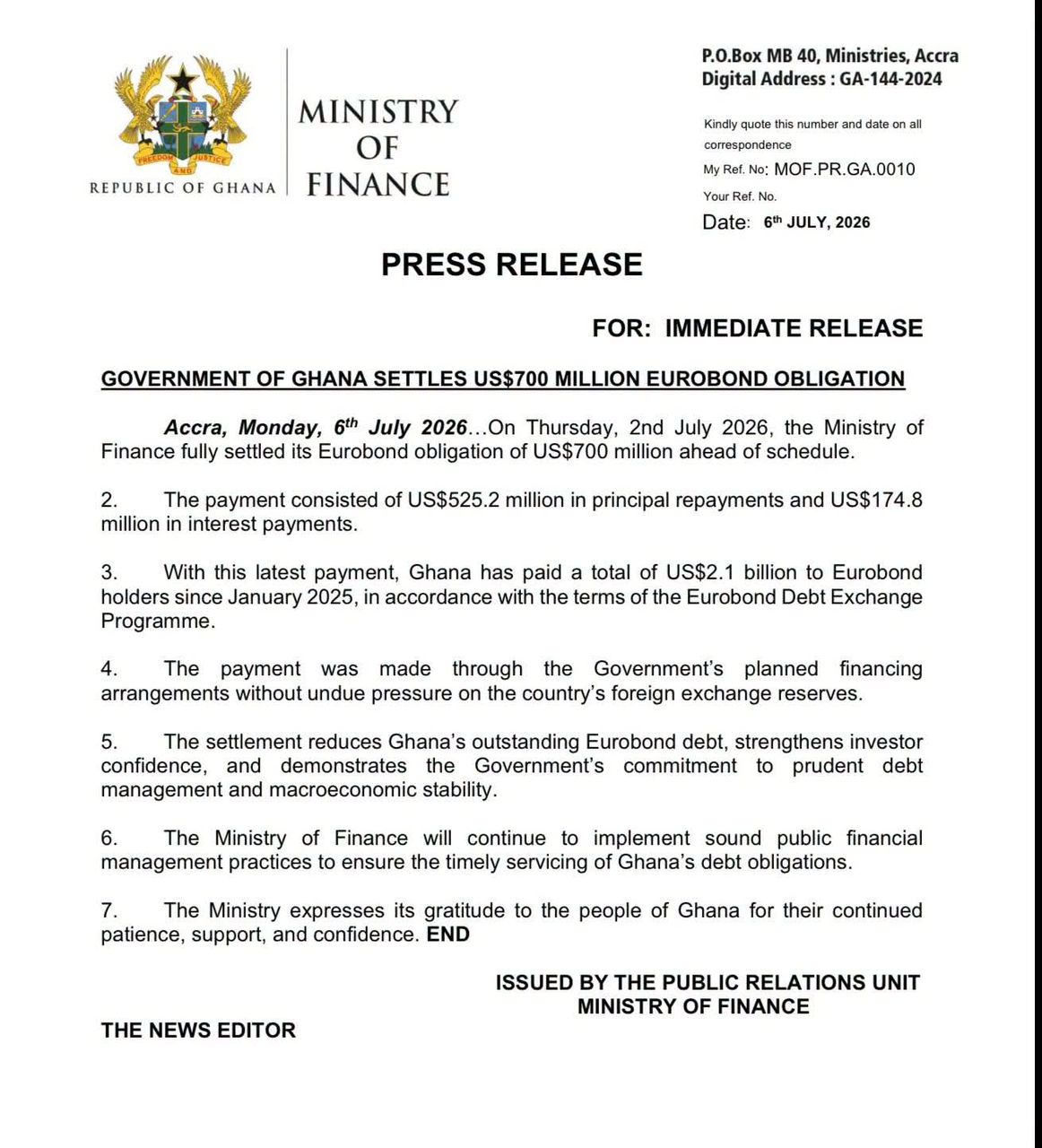
𝗚𝗼𝘃𝗲𝗿𝗻𝗺𝗲𝗻𝘁 𝗦𝗲𝘁𝘁𝗹𝗲𝘀 𝗨𝗦$𝟳𝟬𝟬 𝗠𝗶𝗹𝗹𝗶𝗼𝗻 𝗘𝘂𝗿𝗼𝗯𝗼𝗻𝗱 𝗢𝗯𝗹𝗶𝗴𝗮𝘁𝗶𝗼𝗻 𝗔𝗵𝗲𝗮𝗱 𝗼𝗳 𝗦𝗰𝗵𝗲𝗱𝘂𝗹𝗲
The Government of Ghana has announced the successful settlement of a US$700 million Eurobond obligation, completing the payment ahead of schedule on 2 July 2026, according to a press release issued by the Ministry of Finance.
𝐔𝐭𝐢𝐥𝐢𝐭𝐲 𝐓𝐚𝐫𝐢𝐟𝐟 𝐈𝐧𝐜𝐫𝐞𝐚𝐬𝐞𝐬 𝐑𝐚𝐢𝐬𝐞 𝐅𝐫𝐞𝐬𝐡 𝐂𝐨𝐧𝐜𝐞𝐫𝐧𝐬 𝐟𝐨𝐫 𝐇𝐨𝐮𝐬𝐞𝐡𝐨𝐥𝐝𝐬 𝐚𝐧𝐝 𝐁𝐮𝐬𝐢𝐧𝐞𝐬𝐬𝐞𝐬
Ghanaians will pay more for electricity and water from 1 July 2026 following the latest tariff adjustment announced by the Public Utilities Regulatory Commission (PURC).
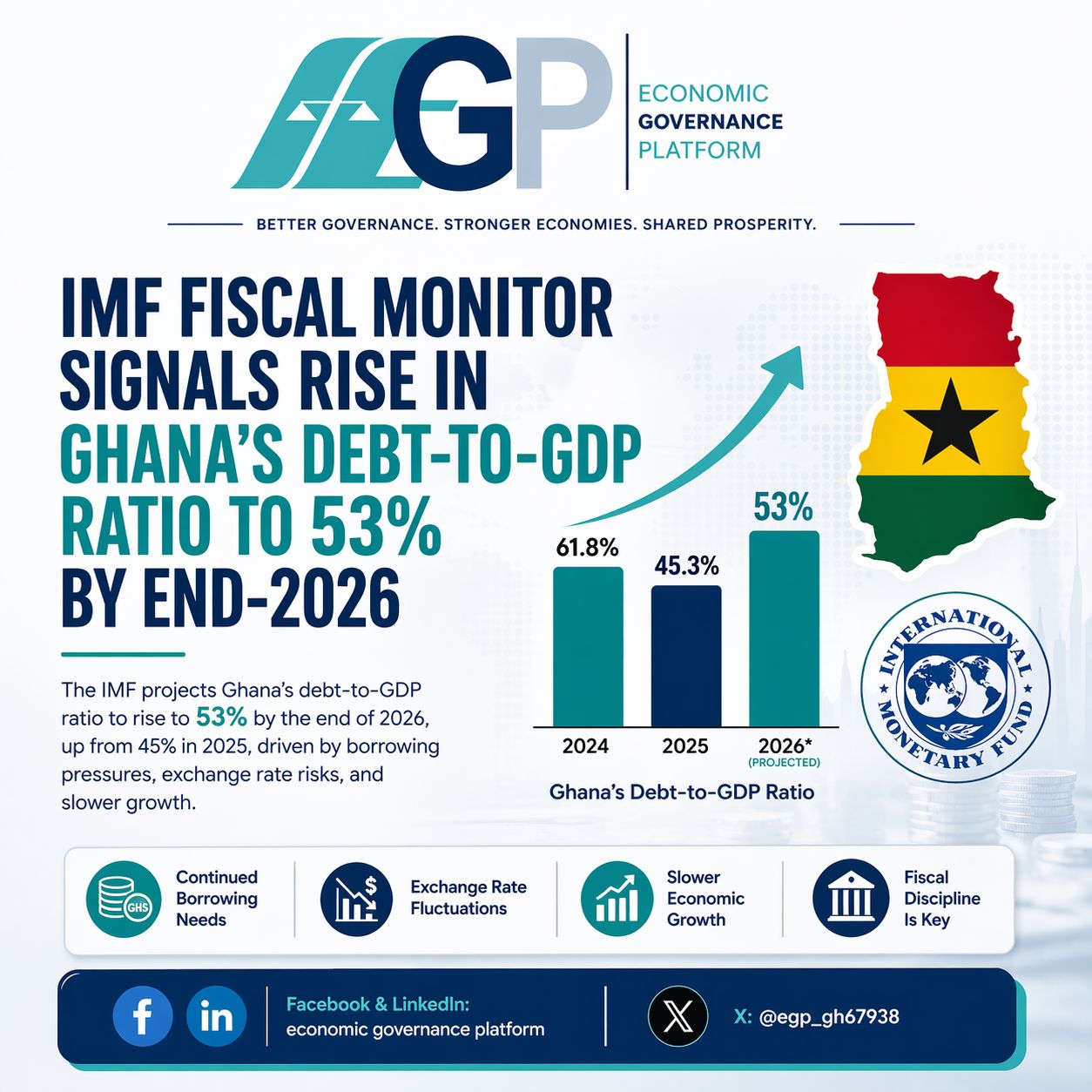
𝐈𝐌𝐅 𝐅𝐢𝐬𝐜𝐚𝐥 𝐌𝐨𝐧𝐢𝐭𝐨𝐫 𝐒𝐢𝐠𝐧𝐚𝐥𝐬 𝐑𝐢𝐬𝐞 𝐢𝐧 𝐆𝐡𝐚𝐧𝐚’𝐬 𝐃𝐞𝐛𝐭-𝐭𝐨-𝐆𝐃𝐏 𝐑𝐚𝐭𝐢𝐨 𝐭𝐨 𝟓𝟑% 𝐛𝐲 𝐄𝐧𝐝-𝟐𝟎𝟐𝟔
Ghana’s public debt trajectory is expected to face renewed pressure, as the International Monetary Fund projects an increase in the country’s debt-to-GDP ratio to 53% by the end of 2026.
Upcoming Events
Join our policy dialogues, town hall meetings, and workshops fostering inclusive economic governance.
No upcoming events found
Check back later for updates.