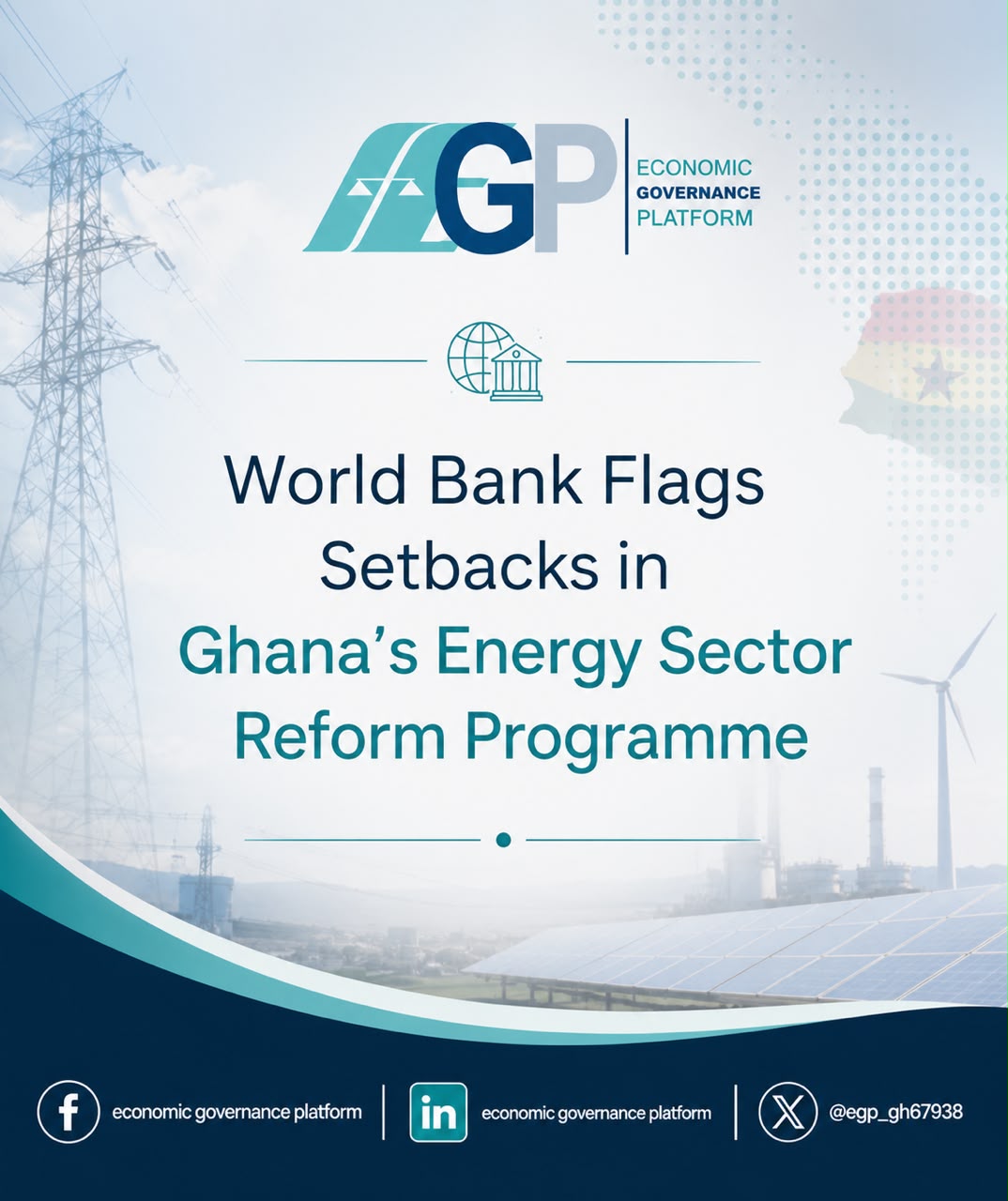
The World Bank has lowered its assessment of Ghana’s Energy Sector Recovery Programme from “Moderately Satisfactory” to “Unsatisfactory”, citing significant implementation delays linked to financing constraints, election-year disruptions, tighter fiscal controls and procurement bottlenecks.
Source: JoyBusiness
The World Bank has lowered its assessment of Ghana’s Energy Sector Recovery Programme from “Moderately Satisfactory” to “Unsatisfactory”, citing significant implementation delays linked to financing constraints, election-year disruptions, tighter fiscal controls and procurement bottlenecks.
According to the Bank’s implementation report released on 30 June 2026, progress has been slowed by delays in the issuance of Commitment Authorizations by the Ministry of Finance, as well as new expenditure controls and procurement restrictions that have affected the timely execution of planned reforms.
The programme, approved in June 2024 and operational since March 2025, is designed to improve the financial sustainability of the Electricity Company of Ghana (ECG). Its objectives include strengthening operational efficiency, reducing revenue losses and expanding access to clean cooking solutions.
The latest assessment indicates that progress has been uneven. Of the key performance indicators, only one was fully achieved during the reporting period. ECG met the requirement to complete its audited financial statements for the 2025 financial year by publishing them in May 2026. However, the report notes that the audited statements had not yet been made publicly available on ECG’s website at the time of the assessment.
Other reform targets remain behind schedule. For example, ECG has rolled out its energy accounting system in only about 20% of its operational districts, raising concerns that nationwide implementation may not be achieved within the expected timeframe.
The assessment underscores the importance of timely financing, effective public financial management and efficient implementation in advancing reforms critical to the long-term sustainability of Ghana’s energy sector.