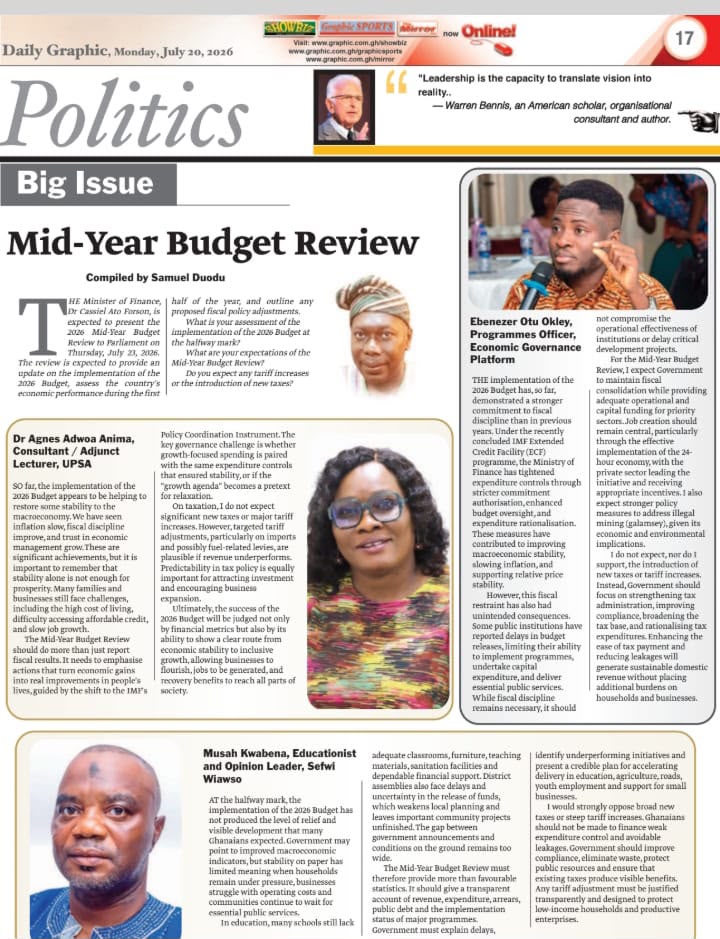
Ghanaians will pay more for electricity and water from 1 July 2026 following the latest tariff adjustment announced by the Public Utilities Regulatory Commission (PURC).
Ghanaians will pay more for electricity and water from 1 July 2026 following the latest tariff adjustment announced by the Public Utilities Regulatory Commission (PURC). The review increases electricity tariffs by 3.49 per cent and water tariffs by 0.85 per cent, continuing a series of tariff adjustments implemented under the Commission’s quarterly review mechanism. According to PURC, the adjustments are intended to reflect changes in key economic variables and support the financial sustainability of utility service providers.
While the latest increases may appear modest in isolation, they come at a time when many households and businesses are still grappling with the cumulative impact of previous tariff adjustments, inflationary pressures, and the rising cost of living. Utility tariffs affect virtually every sector of the economy and often have consequences that extend beyond the direct increase in monthly bills.
For households, the increase means additional pressure on disposable incomes. Although a 3.49 per cent increase in electricity tariffs may seem small, it adds to the cost burden faced by families already spending a significant share of their income on food, transportation, housing, education, and healthcare. Low- and middle-income households are likely to feel the impact most acutely, particularly those whose electricity consumption has increased due to changing weather conditions and greater reliance on electrical appliances.
The impact on businesses is likely to be more pronounced. Electricity remains a critical input for manufacturing, agro-processing, hospitality, retail, and service-sector operations. Higher utility costs increase operational expenses and may reduce profit margins, particularly for small and medium-sized enterprises (SMEs) that have limited capacity to absorb additional costs. In response, some businesses may pass part of the increased cost on to consumers through higher prices, contributing to broader inflationary pressures across the economy.
The latest tariff adjustment also raises important questions about the affordability of utilities and the long-term sustainability of Ghana’s energy and water sectors. Utility providers require adequate revenue to maintain infrastructure, expand services, and ensure reliable supply. However, frequent tariff increases can generate public concern when they are not matched by noticeable improvements in service quality, reliability, and operational efficiency.
It is worth noting that this latest upward adjustment follows tariff reductions announced earlier in 2026, when PURC reduced electricity tariffs by 4.81 per cent and water tariffs by 3.06 per cent for the second quarter. The current increase therefore partly reflects the dynamic nature of the quarterly tariff review mechanism, which adjusts tariffs based on movements in inflation, exchange rates, fuel costs, and other economic variables affecting utility production and delivery.
As Ghana continues its economic recovery and fiscal consolidation efforts, balancing the financial viability of utility providers with the affordability concerns of citizens and businesses will remain a critical policy challenge. Going forward, greater attention must be paid to improving operational efficiency, reducing system losses, strengthening revenue collection, and increasing transparency in tariff-setting processes. Such measures can help minimise the frequency and magnitude of tariff adjustments while ensuring that consumers receive reliable and quality utility services.
For many Ghanaians, the key question is not only whether tariffs should increase, but whether the additional costs will translate into better service delivery, improved reliability, and greater value for money. That is a conversation that must remain central to Ghana’s economic governance agenda.