Ghana’s public debt trajectory is expected to face renewed pressure, as the International Monetary Fund projects an increase in the country’s debt-to-GDP ratio to 53% by the end of 2026.
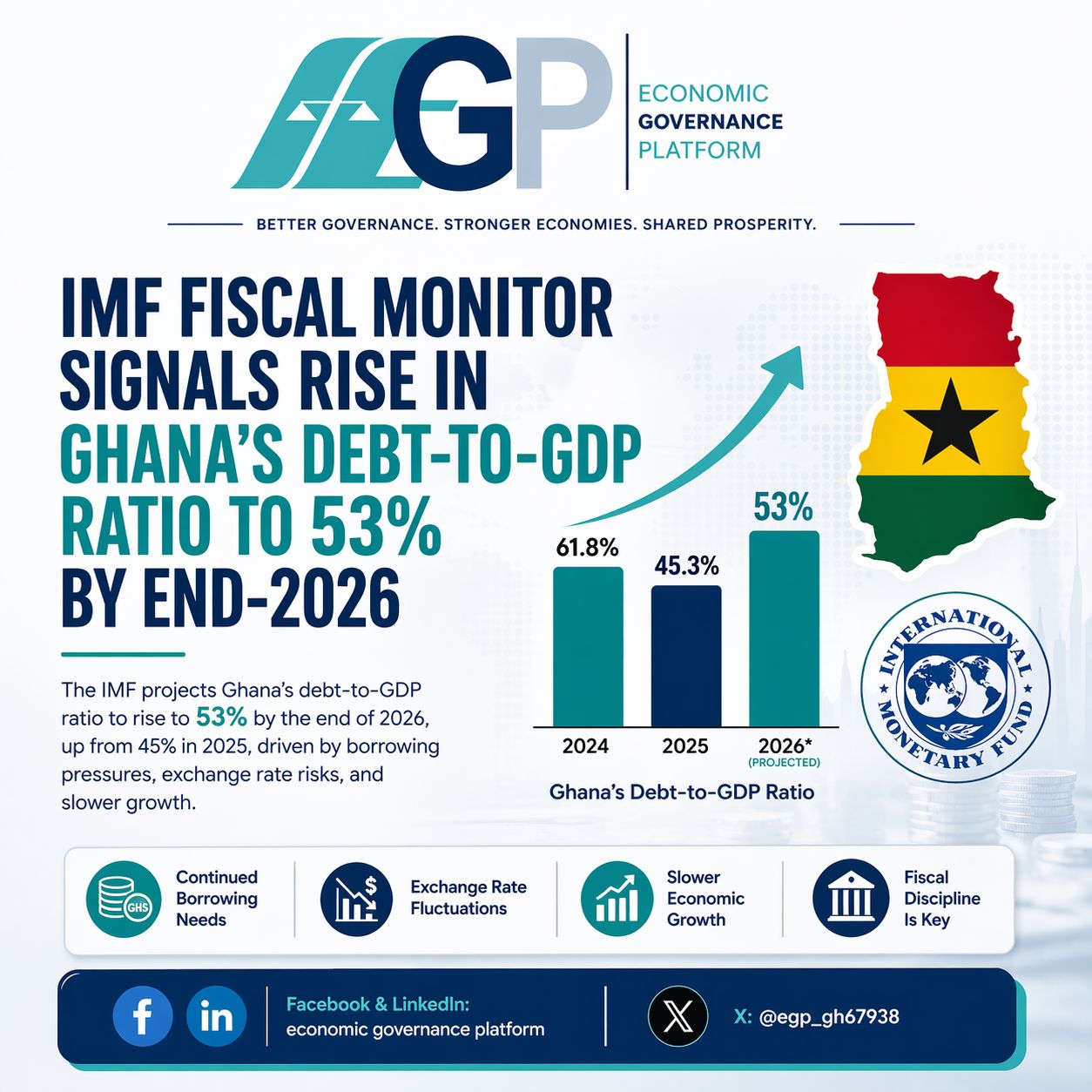
Ghana’s public debt trajectory is expected to face renewed pressure, as the International Monetary Fund projects an increase in the country’s debt-to-GDP ratio to 53% by the end of 2026.
This projection, contained in the latest Fiscal Monitor report, comes despite recent gains in debt restructuring and fiscal consolidation efforts that saw Ghana’s debt ratio decline to about 45% in 2025 from higher levels in previous years.
𝐃𝐫𝐢𝐯𝐞𝐫𝐬 𝐨𝐟 𝐭𝐡𝐞 𝐄𝐱𝐩𝐞𝐜𝐭𝐞𝐝 𝐈𝐧𝐜𝐫𝐞𝐚𝐬𝐞
The anticipated rise in the debt ratio reflects a combination of macroeconomic and fiscal factors. Key among them is the likelihood of continued borrowing to finance government operations and development priorities, even as the country remains under a fiscal consolidation programme.
Additionally, exchange rate fluctuations particularly the depreciation of the Ghanaian cedi are expected to exert upward pressure on external debt when measured in local currency terms.
Economic growth dynamics also play a role. While Ghana’s economy is projected to expand, any slower-than-expected growth could widen the debt ratio, as the size of the economy (GDP) grows at a slower pace relative to debt accumulation.
𝐁𝐚𝐥𝐚𝐧𝐜𝐢𝐧𝐠 𝐑𝐞𝐜𝐨𝐯𝐞𝐫𝐲 𝐚𝐧𝐝 𝐅𝐢𝐬𝐜𝐚𝐥 𝐃𝐢𝐬𝐜𝐢𝐩𝐥𝐢𝐧𝐞
The projected increase underscores the delicate balance policymakers must strike between supporting economic recovery and maintaining fiscal discipline. Following the economic challenges of recent years, Ghana is transitioning from a stabilization phase to a growth-oriented path, which often requires strategic public spending.
However, analysts caution that without sustained fiscal discipline, the country risks reversing the gains achieved through recent debt restructuring efforts.
𝐈𝐦𝐩𝐥𝐢𝐜𝐚𝐭𝐢𝐨𝐧𝐬 𝐟𝐨𝐫 𝐏𝐨𝐥𝐢𝐜𝐲
The IMF’s outlook reinforces the importance of broadening domestic revenue mobilisation as a sustainable path to managing public debt. In particular, attention continues to be drawn to the informal sector, which constitutes a significant portion of Ghana’s economy but remains largely outside the tax net.
Enhancing tax compliance and expanding the tax base could reduce the government’s reliance on borrowing, thereby improving long-term debt sustainability.
𝐎𝐮𝐭𝐥𝐨𝐨𝐤
While a debt-to-GDP ratio of 53% remains below recent peak levels, it signals that Ghana’s fiscal recovery remains fragile and dependent on prudent economic management. The trajectory of the country’s debt will ultimately hinge on its ability to sustain growth, manage expenditures, and strengthen revenue generation.