Finance Minister Dr. Cassiel Ato Forson presented the 2026 Mid-Year Fiscal Policy Review to Parliament, and the evidence he tabled supports that claim. This is not a contested political assertion. It is recognised by Ghana's external partners. The IMF programme has run to successful completion and the country is transitioning to a Policy Coordination Instrument, a step no government reaches without meeting its targets. At EGP, we say so plainly and we commend it.
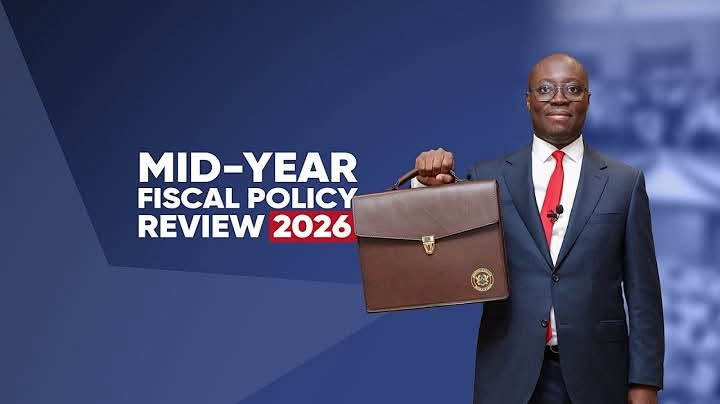
On 23 July, Finance Minister Dr. Cassiel Ato Forson presented the 2026 Mid-Year Fiscal Policy Review to Parliament, and the evidence he tabled supports that claim. This is not a contested political assertion. It is recognised by Ghana's external partners. The IMF programme has run to successful completion and the country is transitioning to a Policy Coordination Instrument, a step no government reaches without meeting its targets. At EGP, we say so plainly and we commend it.
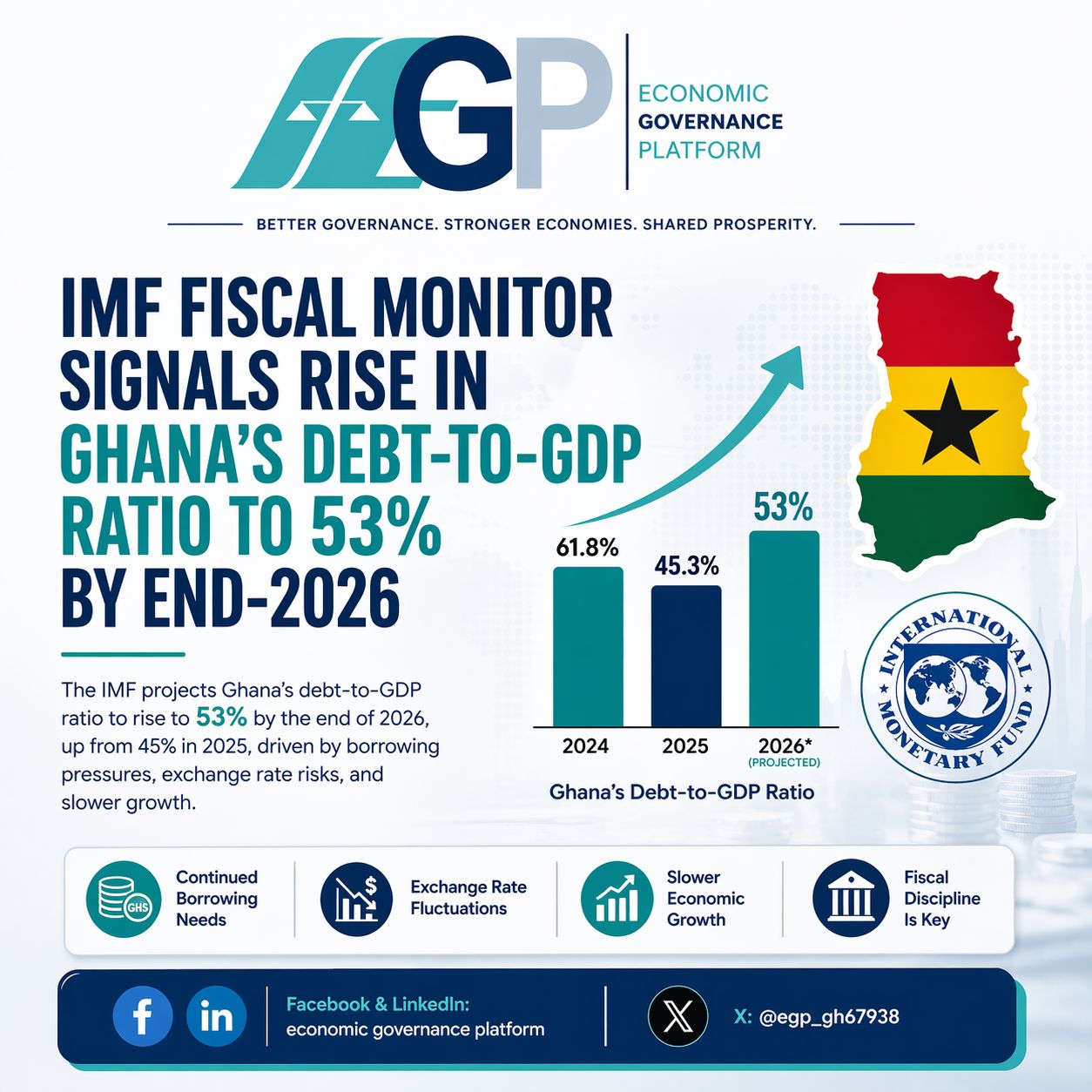
1. The numbers earn the claim. Inflation has fallen to 5.3% as at June 2026, below the medium-term target band of 8% ±2. Real GDP grew 6.0% in 2025, the fastest since 2019, and non-oil GDP grew 7.6%, the strongest in fourteen years which matters, because it means the real sector also contributed to the growth. The economy has crossed US$100 billion for the first time. Government reports that the statutory debt anchor of 45% of GDP has been reached ahead of both the IMF timetable and its own. The Bank of Ghana has held the policy rate at 14%.
2. So our argument is not that stability is absent. Our argument is that stability, having been achieved, is not enough. It is a means to an end and not the end itself. A stable economy is the platform on which a productive one is built and the question this review leaves open is whether we are building.
3. The Minister came prepared for the charge that his government has simply stopped spending. He rejected it, and he brought receipts: GH¢48.8 billion on compensation of employees, GH¢21.5 billion on interest, GH¢11.5 billion on capital expenditure, GH¢10 billion to domestic bondholders, GH¢7.1 billion to the energy sector, GH¢6.5 billion on the Big Push, GH¢5.3 billion clearing legacy arrears, GH¢4.5 billion to NHIS, GH¢4.4 billion into the District Assemblies Common Fund, GH¢1.8 billion on Free SHS. Money is moving. That much is on the record and it should be acknowledged.
4. But read those figures again and a harder story appears. Compensation of employees is roughly four times capital expenditure. Interest payments alone are almost double it. Wages and interest together come to about GH¢70 billion, against GH¢11.5 billion of capital spending. A stable economy is being run on a budget that pays people and pays creditors, and has comparatively little left to build with. This is precisely where stability stops being enough.
5. Capital expenditure is not a luxury item to be trimmed when the fiscal numbers need to look good. It is what allows public institutions to function at all. Our own field monitoring makes the point better than any macro table can: in one Savannah Region district assembly, procurement has reverted entirely to manual processing not because officials are unwilling to use Ghana's electronic procurement system (GHANEPS), but because network coverage around the assembly makes it unusable. No amount of training fixes that. It is a capital and infrastructure failure, and it is quietly costing the country transparency, competition and value for money in every contract that assembly awards.
6. Multiply that across audit offices without vehicles to conduct field audits, courts without functioning registries, clinics without equipment, and regulators without data systems. An institution that cannot be resourced cannot be held accountable for performance it was never funded to deliver. And if a primary surplus is produced partly by underspending capital budgets, then part of what looks like fiscal discipline is really deferred cost — and the bill lands later.
7. The deeper problem is what our economy actually does. Ghana's revenue has sat stubbornly in a band of roughly 15 to 16 per cent of GDP for more than a decade through boom, crisis, default and recovery alike. Every administration has tried to tax its way out of that band. None has succeeded, because the constraint is not the tax rate. It is the structure of the economy being taxed.
8. An economy organised around buying and reselling imported goods generates thin margins, few formal jobs and a narrow tax base. An economy that produces- that processes its own cocoa, adds value to its minerals, manufactures, builds and exports generates employment, formal enterprises, and a revenue base that grows without a single new levy. This is the structural shift the country still has to make, and it is the only durable answer to youth unemployment.
9. Our young people do not need another tax; they need somewhere to work. That is why we at EGP welcome the decision not to introduce new taxes in this review. It is the right instinct. But the absence of new taxes only holds if the revenue base is widened another way by moving the economy from retailing to production.
10. Stabilisation was the hard, necessary first act, and this government has delivered it. Credit where it is due. But the test of the second half of 2026, and of the transition from the IMF programme to the Policy Coordination Instrument, is whether that stability is now converted into productive capacity, into jobs for young Ghanaians, and into properly equipped institutions that make public money work honestly.
International Monetary Fund Africa Centre for Energy Policy OXFAM in Ghana John Dramani Mahama Ghana Anti-Corruption Coalition Ministry of Finance, Ghana World Bank Group
#EGPGhana #MidYearBudget2026 #PublicFinance #Accountability #JobsForYouth